
How far and apparently ethereals entities enter in touch with us?
As I explained in the preceding chapters, businesses use the stock market to finance their activities.
Basically there are two ways that companies use for financing themselves: debt and equity.
My blog focuses on equity holders or also called shareholders.
As shareholders we own a piece of business, while debt holders (bondholders) finance the companies through credits.
Usually bondholders, because they are not owners, they are the first allowed to claim their money if the company goes bankrupt. There is a sort of hierarchy of claim where the shareholders are the last allowed to claim their part of the company’s wealth after default.
This mechanic put the shareholders in a risky position but even gives us the probability of a better gain.
Bondholder return is given and limited while return for shareholders is potentially unlimited.
But don’t worry, that risk can be managed and I will explain to you how to do it in future articles.
Our objective is to find good companies that pay us back as much as possible.
This idea is called “Capital allocation”. Namely find where to put money in order to obtain the maximum return on capital.
Returns are essentially divided in 3 main ways:
- Dividends
- Buybacks
- Retained earnings
Dividends
The most simple and direct method that companies use to share their profits with investors. Dividends are a percentage of the total amount of the capital invested that is pay back monthly or yearly.
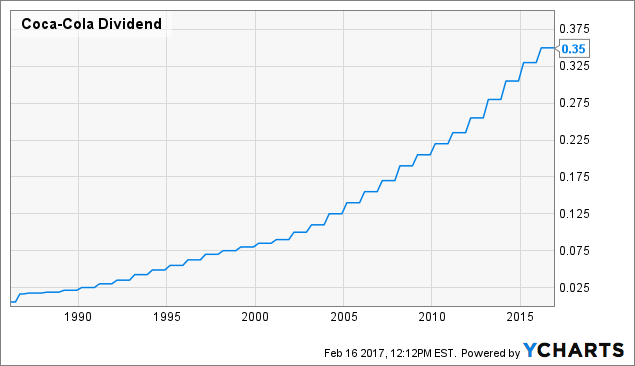
For example Coke Company pays a dividend of 1.64 USD for every share that in this moment worth approximately 46 USD per share (08 august 2020), this dividend is 3.4% of the total capital you had invested in. Usually this dividend is destined to grow over time.
Buybacks
Another option to share profit is through stocks buybacks.
Company buys its own shares in order to reduce the number of circulating shares, doing so investors gain thanks to the rise in percentage owned by the company.
For example: if I had a company that was worth 100b and I divided this company into 100 pieces (stocks), every investor owns 1/100 of the company and therefore 1/100 of the profit. But what happens if I remove 10 pieces of this company shares? Now the remaining investors own 1/90 of the company or in other words a bigger piece of the pie.
A good management buys back stocks when the market price is below the intrinsic value. What is intrinsic value? I will explain in future articles. Summing up, intrinsic value or fair value, it is the value of the firm based on its intrinsic characteristics. Like the value of a car is based on the horsepower or on the brand’s value.
Remember: the value of a company IS NOT the market price.
The price is only what the other investors are willing to pay for receiving the ownership of the business.
Last but not least point is:
Retained earnings
Companies keep profit for a lot of tasks.
It seems silly that the company doesn’t pay their earnings to us.
In reality it is the best option but only if we trust in management competence.
If management has good ideas and it knows how to use your money to grow the business, you will gain thanks to organic growth of the business itself (development of a new product) or through smart acquisition (for example when FB acquired Instagram). That growth will increase the pie size and then the value of your ownership, that it will recognised by the market in the future, in others words the stock price will increase.
Another example: Disney is expanding its brand territories by developing a platform, Disney+, to cope with the competitors, and follow the changing users behaviors, from purchasing DVDs to buying streaming services.
In the next article I will write about an insidious danger in the investing world.
Following chapter 8. Mr Market
Feel free to comment, share my article with friends and subscribe to my newsletter if you like my content and you want to follow me towards financial freedom.
You will obtain free access to my newsletter:
- Financial education
- A open minded and value oriented mindset
- Business and sector analysis
- A stoic and calm attitude towards the market ups and downs
No noise, only signal and high valuable contents
“Everything should be made as simple as possible, but not simpler.”
Albert Einstein
Leave a Reply