Do you remember when I spoke about how companies reward us? (7. How the companies reward us). I decided to write some case studies in the course of this blog because I think that reinforces the concepts in our minds.
Initially, the goal of those studies is to explore events that give us a hint about a particular notion, analyzed during the main course. In the future, I will write a whole analysis of stocks that are under my radar or in my portfolio.
In this case, I’ll refer to Berkshire Hathaway’s share repurchase in the last quarter. Berkshire Hathaway $BRK is the company whose chairman is the known Warren Buffett. $BRK is a holding, in other words, it’s a company that owns other companies. The work of Buffett as chairman and Munger as vice-chairman is to allocate the capital generated by the holding towards subsidiaries and sometimes acquiring whole private companies or slices of businesses in the stock market.
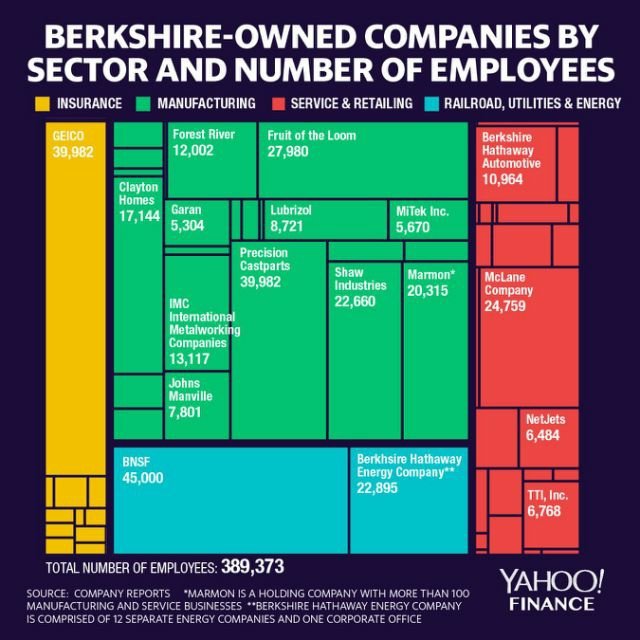
Buffett’s skill is to find the best way to allocate the money towards his business with the goal to generate high returns for shareholders of $BRK and for himself, since he has a good portion of his wealth in $BRK. Here another lesson to take, a good manager has skin in the game, it means he’s involved in the risks beared by the shareholders.
“If you do not take risks for your opinion, you’re nothing.”
Nassim Nicholas Taleb, Skin in the Game: The Hidden Asymmetries in Daily Life
Sometimes the best idea is just to invest in his stocks. Buffett careful does buybacks only when the price of $BRK is below its intrinsic value (Intrinsic value: notion we just started to learn in the blog but about we will go deeper in the future, ELI5 Intrinsic value or fair value is the price you should pay for a company from a business perspective, in respect of its future earnings).
Well, what happened in the last quarter? Berkshire decided to repurchase its own shares for an amount of 9 Billion dollars, already in the previous quarter, Buffett repurchased 5.1 Billion. Since the start of the Covid-19 crisis that crashed the market, Buffett gave to $BRK shareholders a total of 14.1 Billion.
I have to say that I’m a Berkshire Hathaway shareholder and this decision make me happy for two reasons:
1) Buffett felt that BRK was undervalued, this means that I bought BRK at a fair price. Basically, my evaluation was right from Buffett’s perspective.
2) The price of BRK rises propelled by share repurchase, therefore my wealth grows.
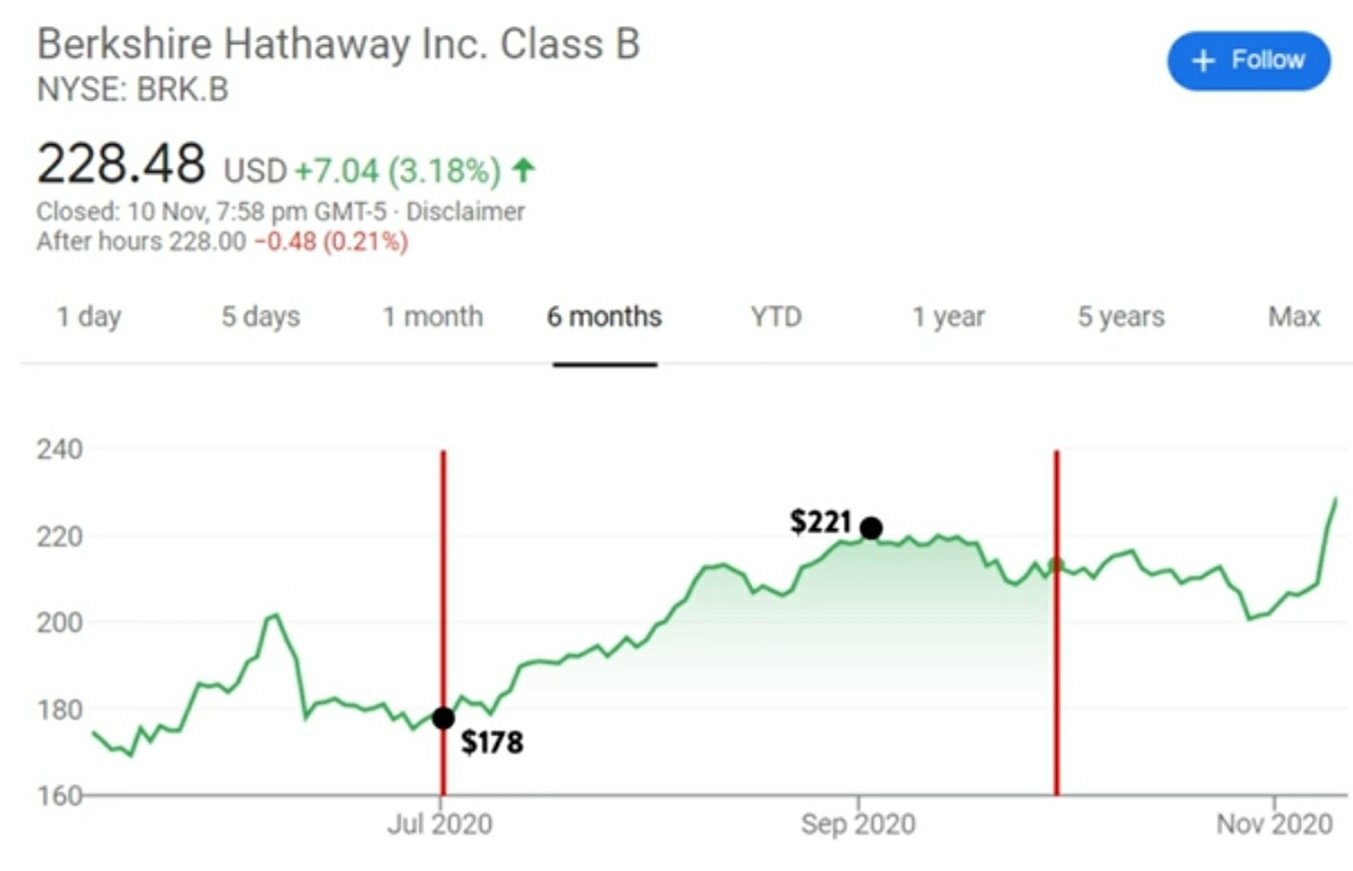
An important lesson we can extrapolate from this event:
A good company uses his money to invest in his own business when Mr Market (8. Mr Market) throws good prices.
But the most important point is the balance sheet of the company. In other words a lot of cash and low debt, in this way, when the crisis comes, management can take the opportunities that arise from.
“In the midst of chaos, there is also opportunity”
Sun Tzu
Not every management repurchases shares in the best moment, often managers repurchase shares when the price is very high. In periods of widespread optimism, many managers in order to please shareholders and to exercise their options (Management stock options: we will return on this point, ELI5: benefits to management if stocks reach a certain price) they do buybacks in the worst period, when the stock price is overvalued.
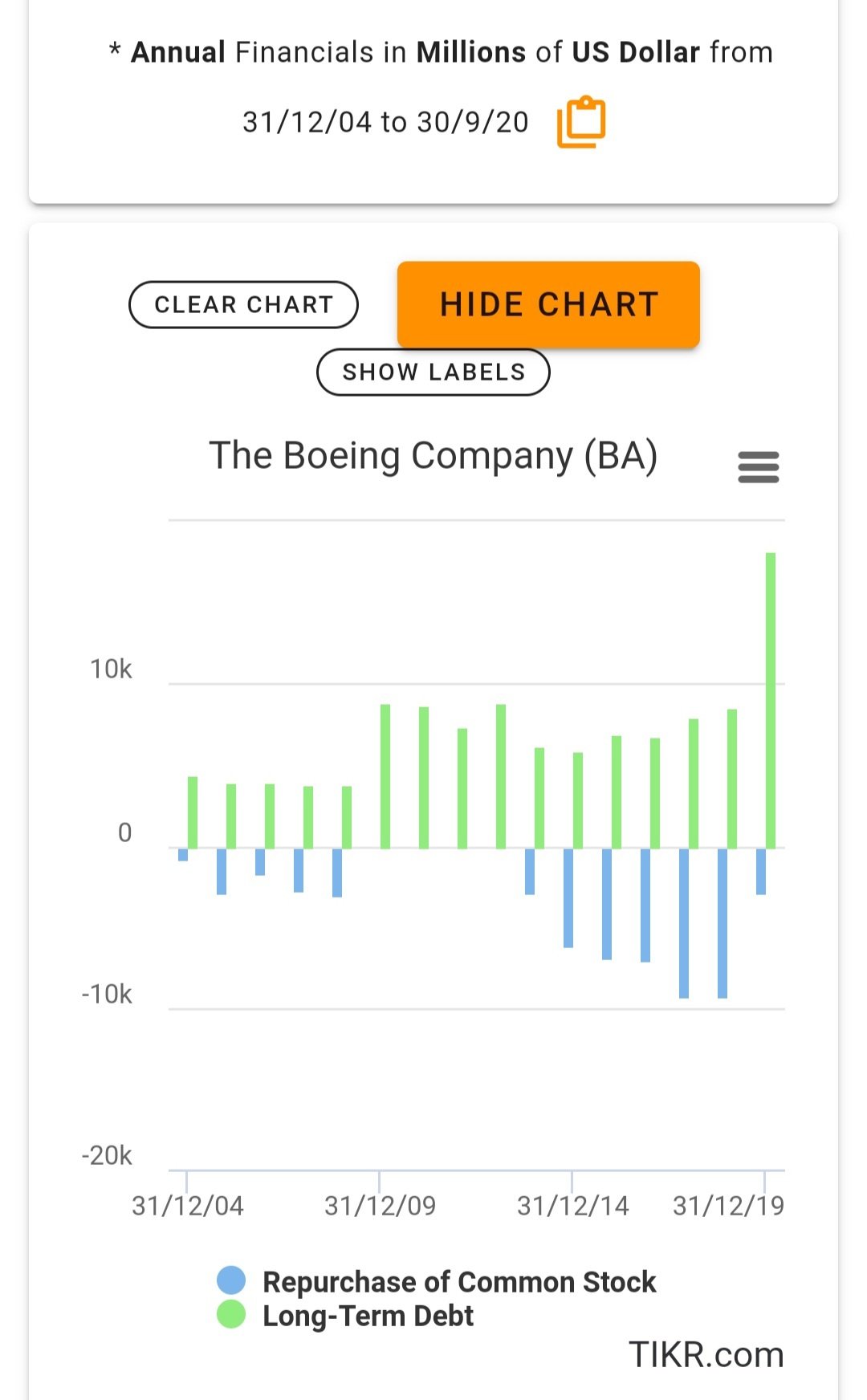
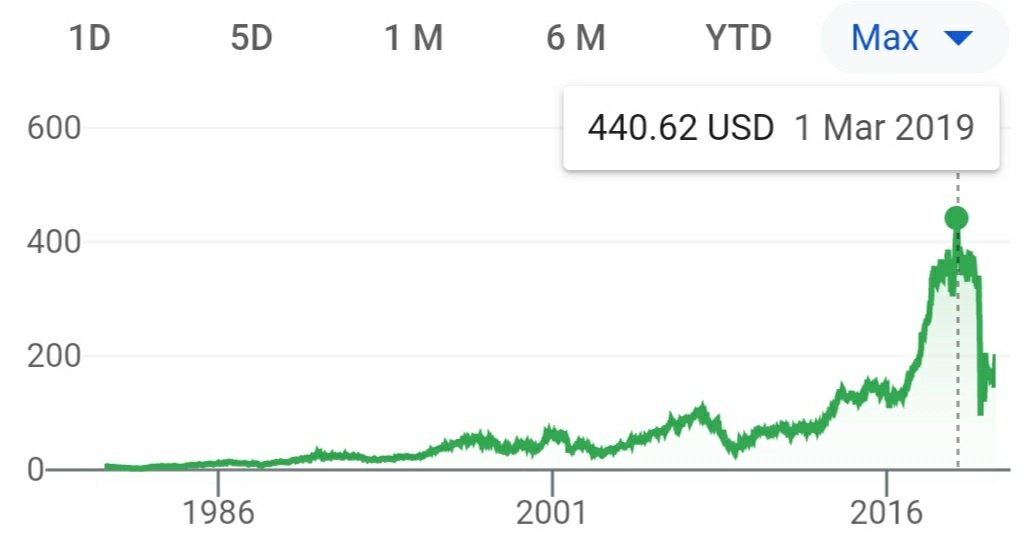
Those two images are enough to explain what goes wrong with Boeing. Managers repurchase shares when the price was high, moreover, they do buybacks while piling a lot of debt, instead of doing that with cash produced by the business itself (Free cash flow). I’ll remind a notion that I have already explained in a previous article: if managers repurchases shares when the price is high, they reduce the total ownership less than if they do buybacks when the price is low. When the prices are low, with the same amount of money management can buy more shares. Therefore, fewer shares outstanding implies more value for us as shareholders.
“What is smart at one price is stupid at another’.”
Warren Buffett
In the end, I want to point out the difference between investing and speculating. Speculators buy stocks waiting for another buyer who pays more and they gain thanks to the difference, an investor instead buys a business and his gain depends on the quality of the management and the cash generated by the business itself. The former hopes to find a buyer, sometimes only more fools than him. The latter invests in the business for the long run and gains because of the business itself not for the willingness of other speculators to pay more for the same piece of paper.
Thank you Warren for making us wealthier.
Free investing course Be Prepared
Feel free to comment, share my article with friends and subscribe to my newsletter if you like my content and you want to follow me towards financial freedom.
You will obtain free access to my newsletter:
- Financial education
- A open minded and value oriented mindset
- Business and sector analysis
- A stoic and calm attitude towards the market ups and downs
No noise, only signal and high valuable contents
“Everything should be made as simple as possible, but not simpler.”
Albert Einstein
Leave a Reply