John 1:1, KJV:
“In the beginning was the Word,
and the Word was with God,
and the Word was God.”
In Greek, “Word” is Λόγος (Logos).
What are words?
Words are data structures.
These structures interact within our minds and with the external reality in which we operate.
In other words, our ability to interact effectively with reality depends heavily on our understanding of the words we use. Those words, in turn, shape our understanding of our environment, in other words, our mental model of reality.
“We always express our thoughts in words which are nearest at hand. Or, to reveal my whole suspicion: we live at every moment no other thought but that for the approximative expression of which the words are present in our minds.” Nietzsche F.
Data structures?
Superficially, a word is just a group of letters. We can go a little further and say that words represent objects related to our reality. My opinion is that words go beyond this shallow description. Words are data structures in the sense that they activate our memories, where experience and knowledge live.
So we can say that the meaning of words is somewhat personal and highly dependent on our personal memories, experiences, and knowledge. Words aren’t absolute, but relative, and it is entirely possible to induce a person to give a word a meaning that is not the same as the meaning another person gives to it.
A cluster of words that gives meaning to our perceptions is called a mental model.
A word can cause a sensation related to our experience, or to something we experience through movies or induced empathy.
This dissociation between the way we assign meaning to words and the number of words, and therefore the number of meanings our brain is populated with, has an effect on our interaction with reality.
Is a mental model important?
“With few exceptions, the more parents talked to their children, the faster the children’s vocabularies were growing and the higher the children’s IQ test scores at age three and later.”
Hart, B., & Risley, T. R. (1995/2003 summaries of their findings).
The more words we know, the more granular our understanding of the model becomes, and the higher-resolution view of the world and its opportunities we get.
Most people prefer to enjoy life without thinking too deeply, without giving too much complex structure to their understanding. But what is the consequence?
The consequence is that some “architect” will provide these people with the data structures that serve its own advantage. In other words, someone else will program their understanding for their own sake.
Power Dynamics
Is it important if someone else is programming us as long as we feel happy?
It is, for the simple reason that we lose the opportunity to deal with the truth. What is true is the best approximation we can have of how our environment functions by applying mental models. Conversely, happiness can become an illusion that distances us from reality, and the entry ticket has to be paid through pain.
So pain is real.
Still, the question is: is facing reality worth the pain? Yes, because desynchronizing ourselves from reality by accepting approximate mental models brings frustration. Our minds analyse and perceive our surroundings, and the dissonance between our efforts and the results produced by the Reality Feedback Machine can push us deeper into illusions. This enables a self-reinforcing flywheel that makes us weaker and weaker, surrendering the power to shape our destiny to the masters of our illusions.
My feeling is that the rise in mental pathologies is related to the fact that we, as a society, are detaching ourselves too much from reality for the sake of third-party interests that use words to hide themselves and their goals behind layers of meaning.
But let’s analyse some words. I think that, at some point, this analysis will hurt someone’s feelings, so I want to start with more acceptable words and explain why I think they are often misused. Misused in an apparently innocent way, through just a slight divergence from the original “data structure”.
It is clear that the more complex and broad a word is, the more words we need to convey the right meaning.
So, what is power?
Think about it and try to give your own explanation.
Now I will give you the original meaning of the term.
power (n.)
From Old French poeir/pouvoir (“to be able”), from Latin posse (“to be able, have the capacity”).
Root meaning: ability, capacity, or capability to act.
The inability to act is something I have thought about extensively. I realized that modern man is mostly unable to act.
Modern Western men may think they have power and money, but in reality they have neither. What they have is mostly the illusion of power, based on a misunderstanding of the term.
I think the digital world we immerse ourselves in gives us the feeling that we are free. The reality is that we are often just passive consumers, trapped inside our own minds, where we feel free and able to act.
Many of us spend our entire lives passively observing others or expressing our emotions on social media, beneath rage-bait posts designed for engagement, in comment sections populated by bots.
So, no action means no power. Indeed, ours is an anxious society, and we offer people pills to suppress their anxiety, which is the feeling that compels us to act. But to act is to exercise power. Nobody wants you to have power. They want you meek like a sheep and medicated like a zombie.
Let’s look at some words and how understanding their meanings can enhance your ability to act and, therefore, your power.
Money
If you are not the son of a stockbroker, as Warren Buffett was, it can be difficult to understand what money really is at a young age.
The perception is that it is something you spend to satisfy your needs. But it can also be spent satisfying needs that someone with a marketing team and an understanding of human beings has planted in your brain. Still, that isn’t the point I want to touch on here. What I really want to talk about is the meaning of the word.
Money serves several functions: it is a store of value, a medium of exchange, and a unit of account. So money isn’t just something in your pocket that you use to buy some shiny car. Money serves three different functions, and by referring to them with a single word, we simplify our mental burden. But do we simplify our lives as well?
No, we don’t, because, as I said, by finding a shortcut through a simplified word, we surrender meanings. In doing so, we surrender power to whoever stands behind this abstraction called money.
If money, in its trinitarian identity, hides its role as a store of value, look at the prices of the services you use, your healthcare costs, and the quality food you want to eat. If those prices rise faster than your savings grow, that function is failing you. Yet we may not realise it because it is buried beneath a shallow name.
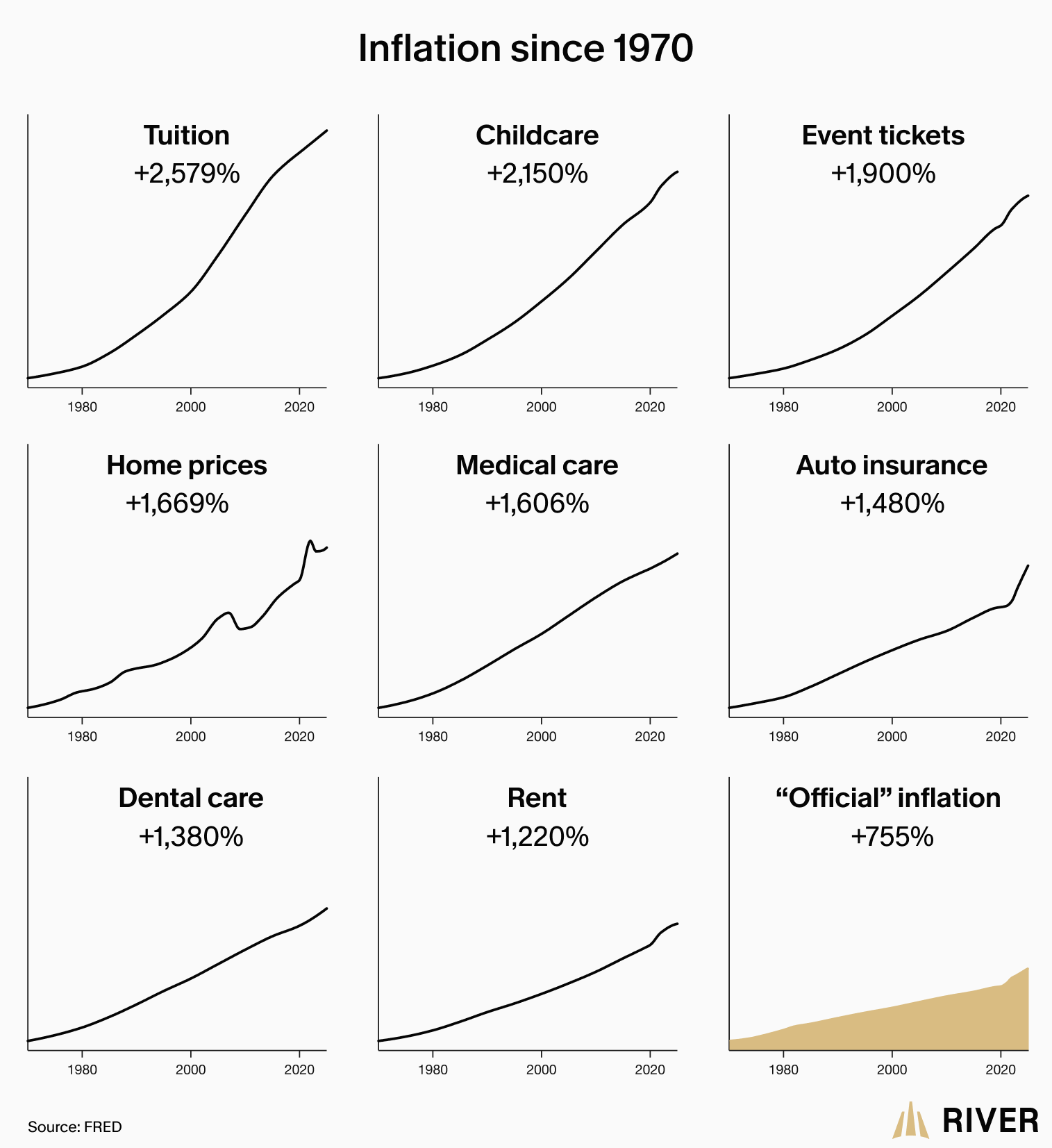
What do I mean? Well, you are paid in money, and you spend money. Have you ever noticed the prices of things increasing? Holding the same amount of money while prices rise means losing purchasing power. You see? Power.
So if you don’t understand that money can fail as a store of value, you may be losing power without even realising it. Because we simply refer to it as money, the average person may not even think about what a store of value is.
Indeed, fiat currencies, the abstraction commonly thought of as money, can be a poor way to preserve wealth over time if the interest earned does not keep up with inflation. Yet the system promotes saving in money as safe. Safe in what sense?
So why reduce a complex topic like wealth to a single, trinitarian notion of money? And who benefits when people overlook these distinctions? This brings us to the Cantillon effect.
The Cantillon effect describes how new money enters an economy through particular channels rather than reaching everyone equally and simultaneously. Those who receive it first can spend it before prices fully adjust. Those who receive it later, or whose incomes do not increase, may face higher prices without a corresponding increase in purchasing power.
I’ve also added an image for those who prefer a visual representation.
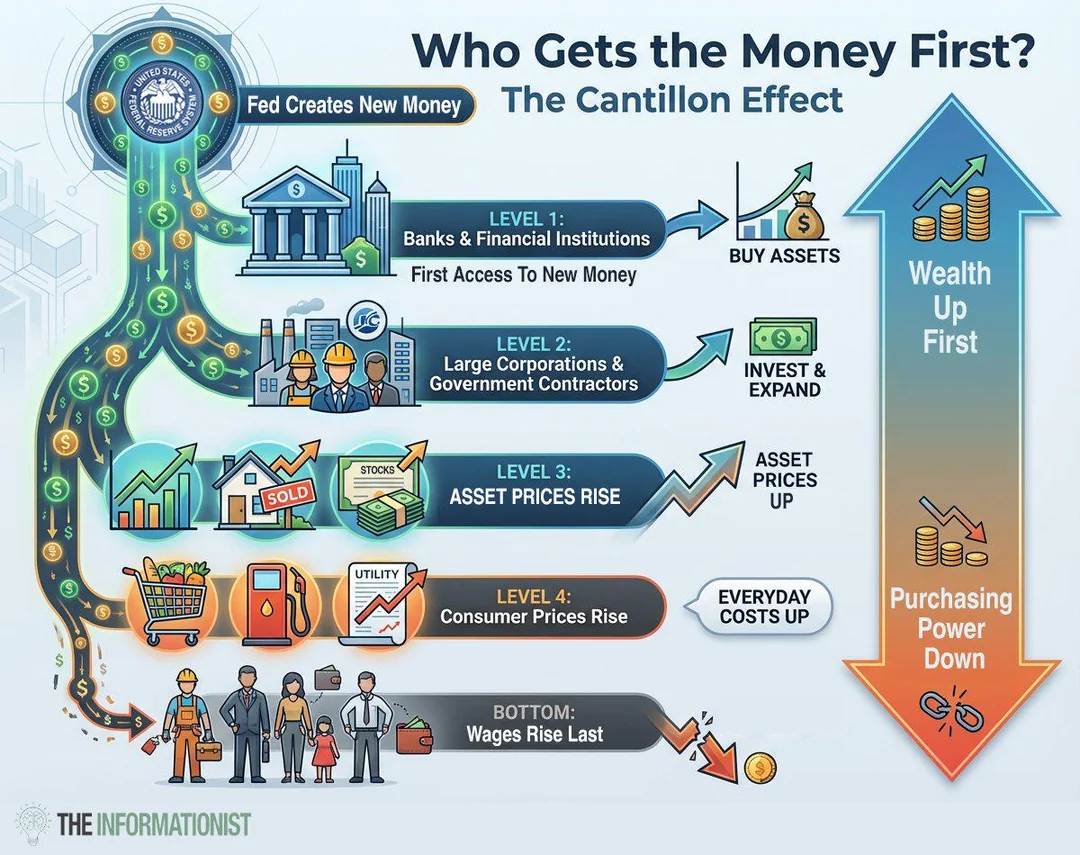
My view is that those who benefit from this confusion have little interest in helping you understand the complexity of the term “money”. Some can gain while your purchasing power declines, particularly if they receive new money early or own assets whose prices rise.
The ecosystem around the notion of preserving one’s wealth is filled with complex terminology: bonds, stocks, options, trading, risk, and countless other terms. In my view, this terminology is often used to create confusion and discourage people from understanding money and increasing their power by preserving their wealth.
I’ve tried to educate people about this topic through my blog series on investing. (Be Prepared index)
If your money keeps losing purchasing power, you are literally bleeding power. Your ability to acquire resources and buy yourself time is reduced day after day.
Comfort
The word comfort originates from the Late Latin verb confortare, meaning “to strengthen greatly”. It is derived from the prefix com- (intensive or “together”) and fortis (“strong”).
That is very different from the meaning we are used to today, which is more about making a person weak instead of strong.
Think about it. When you are looking for comfort, for a comfortable environment, do you picture something that makes you stronger and tougher? It isn’t just about strength. It is about something that “strengthens greatly”.
When you think of strength and something that makes you stronger, do you think of going to a gym, a place that many people see as uncomfortable?
Those who have an interest in selling us things and describing them as comfortable, or in convincing us that comfort has certain characteristics, are probably interested not in making you stronger, but in making you weak and reliant on their products and services. These have more in common with addiction than with activities that strengthen you.
Some people will probably say, “Yes, but you need to rest, and rest requires comfort.” That’s certainly true, but what kind of comfort are we buying nowadays? Our favourite TV series? A video game? Some junk food?
What I’m questioning is the quality of the activities our society uses as a form of comfort and whether we can call them ways to “strengthen greatly”. I feel that nowadays, because of the distortion of the word comfort, our minds automatically accept a flawed interpretation of the word that puts us in a state of weakness instead of strength.
And again, you are surrendering your strength and physical energy, becoming weaker and powerless.
Happiness
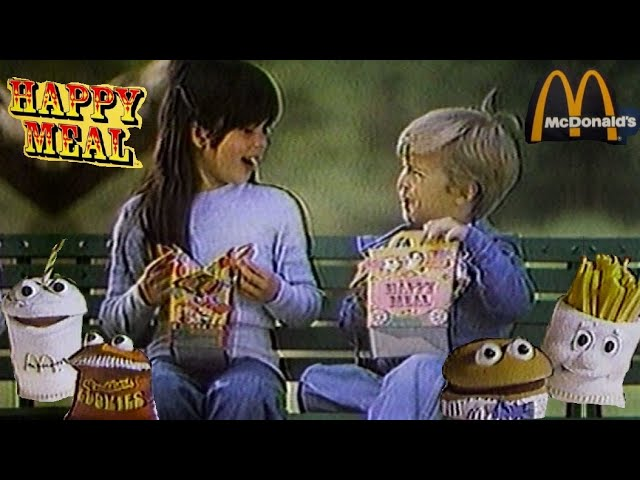
It seems innocent to associate fast food with happiness in children’s minds, but to businesses, children are just consumers.
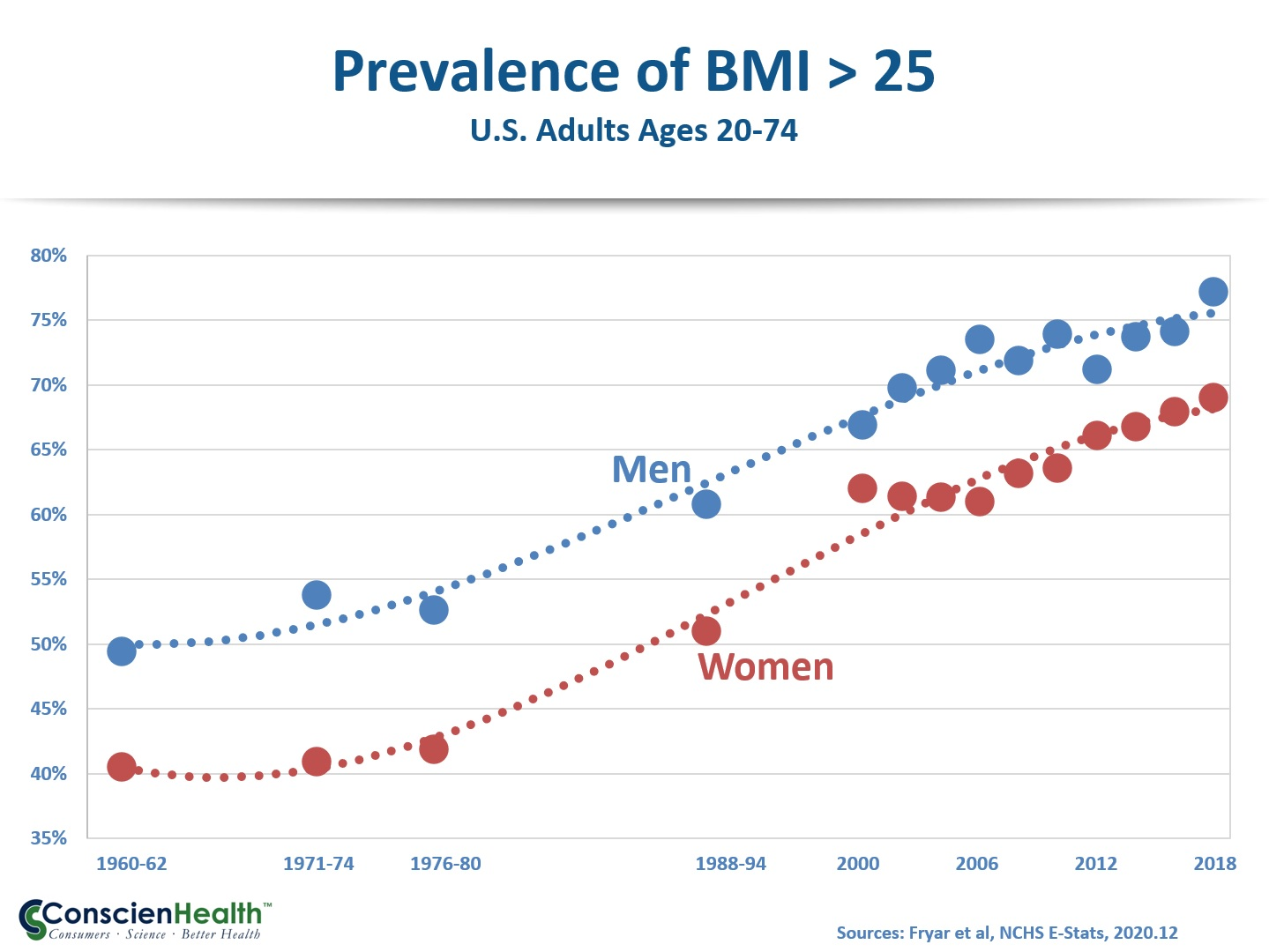
“Over the past 40 years, global rates of overweight and obesity have increased substantially [1], leading researchers to explore contributing mechanisms. While numerous biological (e.g., genetic, hormonal) and behavioral (e.g., sedentary lifestyle) factors are known to be associated with obesity [2], one of the key systemic changes in our environment that has paralleled the timeline of rising obesity rates has been the exponential increase of ultra-processed foods (UPFs) in our food system since the 1980s [3, 4]. “ https://pmc.ncbi.nlm.nih.gov/articles/PMC11150183/?utm_source=chatgpt.com
The mechanism is basically a habit loop:
- Cue: seeing the logo, box, toy, ad, or restaurant
- Reward: toy + taste + parental attention + novelty
- Memory: “McDonald’s = happiness/fun”
- Repeat: the child asks for it again
So, is happiness simply looking at your children’s smiles and thinking that this loop represents the meaning of the word?
Is it really happiness if it ends up making your children miserable day after day and potentially turning them into people who are more prone to addiction, when, at the end of the day, they were simply looking for happiness?
So, in order to reward your brain with a feeling that has been branded as happiness, you are surrendering your health, which is the most important feature that unlocks the ability to act. So again, you are surrendering power.
Love
Love is an interesting one, can such a powerful concept be reduced to one single word?
| Language | Commonly cited number of major “love” words |
|---|---|
| Chinese | No fixed number; roughly 5 to 10 major core terms depending on how you count |
| Ancient Greek | Commonly 4, sometimes 6 to 8 in broader discussions |
| Japanese | 2 major core words, but more if nuance words are included |
| English | 1 |
How much broader can the ability to convey such a profound sentiment be for a population that has ten different terms to describe it?
A painting can express itself more completely by using a variety of colours. In the same way, a human being can describe himself more broadly by using many words with subtle differences.
On the other hand, how powerful is this word? Love is like a dogma. You can’t really discuss what love is. Even the smartest and most educated people respect the untouchable aura that this word carries.
Mostly because pushing people who are used to hiding themselves behind vague explanations, both with others and within themselves, can suddenly cause discomfort and negative reactions.
It is a simple word by itself, but it represents a complex structure that we are limited to defining and discussing through a single word.
I’m sure the answer is that love is complex, that in every brain there is a different dataset related to it and different complex interactions, and that using one word to define it is just a low-resolution approach.
Strength
So what is strength? The first thing that comes to mind is often physical strength: the strength of a powerlifter lifting a heavy weight, or the strength of someone practicing a martial art. But what does strength really mean?
In my opinion, strength can be described as the ability to hold. To hold a weight, hold a position, or hold one or more contrasting thoughts in your mind.
How does a structure hold its shape? Usually because it is built on a solid foundation and with strong materials. What if strength isn’t really about lifting weight, but about building strong fundamentals?
How do you build mental strength, then? By speaking to yourself with the right words, by building strong data structures that support your personality.
A brief example: over the years, I’ve become more and more disciplined about nutrition. For years, I’ve followed the latest research on the subject because I genuinely felt it was important. By learning how the data structures that are macronutrients interact with our bodies, I realized how essential it is to build my body on solid foundations if I want to have real energy and fully enjoy life.
Do you see the fractal here? Do you see the parallel? Nutrients and words are data structures that interact with our bodies and minds and build the foundations of our strength. Not surprisingly, as a society, we are lowering the quality of both: we consume empty words just as we consume empty food. The result? Fragile minds built on top of fragile bodies.
Someone once called me rigid because of my discipline, but what do you build foundations out of? Rubber or reinforced concrete?
Nation
What is a nation, and how does the notion of the state arise?
Initially, there were families, not even tribes. The first human aggregate was the family, and the gods of a family were their ancestors. The role of the family was to defend the sacred fire that represented those ancestors.
Over time, charismatic individuals found ways to aggregate families, creating tribes and cities and bringing them together around shared gods and a centralized sacred fire. Influential people within these human communities were often connected to these gods and their ceremonies. They created ceremonies, defined hierarchies, and created new words or gave new meanings to old ones in order to root themselves in the logos of the people, the plebs.
Initially, the king was a religious figure, similar to a priest, because it was easier to become the representative of an already existing power, a form of power defined by words such as fire, and then detach himself from the family and its ancestors and become a standalone entity with a specific name.
Is the nation the same kind of community that human beings originally built around families? Is a nation something worth sacrificing oneself for?
Recently, after I lost a friend during the war in Ukraine, I started questioning my role as an individual who forms part of a community that can be called a nation, but also part of an aggregation of nations that share the same values, as in the case of Europe, or even more broadly, part of a civilization that one may feel a duty to defend.
But what is a community? What is a civilization? What is a hero? What happens if we stop defending the civilization we belong to?
Is the hero the one who dies for the interests of a third party that exploits the community? Is the hero the one who denounces what is morally wrong within the hierarchy of that community?
Think about Snowden or Assange. Were they heroes, and what did they gain? Recognition from the community for having sacrificed their lives for the truth?
So what is truth? What are morals? Are hierarchies indispensable, and if they are, are they moral? Are morals data structures whose goal is simply to make you “meek like a sheep”, respecting “the law of Caesar”, as taught in the Bible?
I think this is the right moment to try to answer these questions, and the right place to start is with the meaning of the components that, like the ingredients of a recipe, help us better understand what the right choice is.
In other words, who hijacked the community and its “logos” in order to gain an advantage?
How many civilizations with different words exist? How many of these words have been manipulated through movies, music, and artificial intelligence in order to bring people into combat to defend the interests of fewer and fewer human beings, giving them words like hero and warrior as a way to provide them with an identity and a community to defend, when the real goal is simply to orchestrate plans by coordinating the masses?
Hero
What is a hero? What is their role, and where did this notion come from? The hero was conceived as part of the earliest human communities.
Religion, ceremonies, sacrifices, and heroes are the ingredients that bring people together to achieve a common goal. The main goal of a community is to defend itself from threats. But the rise of the feudal system, with its complex hierarchies and static communities, transformed the goal of the community into that of a single person who exerted power over the fief.
A leader’s ability to manipulate a group of people is the main feature that has brought our species to the highest level among animals. But this superpower comes with side effects, such as the centralization of power to serve the interests of only a limited number of people: an aristocracy that works behind the scenes, behind the political front end.
So what is the role of the hero? Exactly that: a role. A word that represents an ancient archetype that many men identify with, leveraged by movies to keep this archaic impulse alive for the benefit of those in power, by turning young men into martyrs on the battlefield.
What about AI?
John 1:3
“All things were made through him, and without him was not any thing made that was made.”
So it seems that Logos was behind the creation of everything. Logos is presented as the reason why everything exists. Everything has been prompt-engineered through words since the beginning. In other words, our world was vibe coded.
We realize the importance of words even more today, not just because words can arouse masses of humans to fight battles, but because now they can also arouse masses of digital entities to build our reality, both digital and physical.
In other words, it seems that religion was, in some sense, an expression of our need for unbounded creativity. Indeed, what does God do if not create? Humans do something similar through procreation. But what about the next iteration of life?
We built a tool to make us more creative, and we are striving to make this tool as good as possible. We even want the tool itself to become alive. Perhaps the need to create and procreate is so ingrained in our species that we are trying not only to create new humans, but also entirely new forms of life.
But once we realize that we can use words to create, the question becomes: are we sure we are synchronized with our logos? Are we sure that what we ask for is what we really want?
Social Media
Words are becoming increasingly digital, and because of that, they travel through space and time more easily and quickly.
In the past, in order for the ruling class to synchronize a community around a topic of interest, it was necessary to convey ideas orally during organized religious gatherings of the tribe or during events such as gladiatorial games in the city arena. Then writing arrived, and spreading words became easier because they could be reproduced and distributed. Laws could be written, preserved, and presented as if God himself had blessed those words.
Nowadays, the digitalization of words makes it easy for a few words to go viral and produce consequences in the physical world.
A recent example is what happened in Ceuta, the Spanish territory in North Africa. Between July 30 and 31, 2026, more than 70,000 people irregularly crossed into Ceuta from Morocco. Spanish intelligence had already detected plans circulating through social media for a mass crossing. Two of the groups being monitored had around 180,000 followers in total.
The first thing I thought when I heard the news was: how can tens of thousands of people be mobilized so quickly toward a border? Part of the answer has to be searched for in the viral posts, videos, and messages circulating through social media.
In other words, playing with words nowadays has become increasingly effective, and when combined with low attention spans and the speed of digital communication, this can translate into the mobilization of people in real life.
It is hard to say how this situation will be leveraged in the future in order to engineer social unrest.
But one thing is certain: the ability to unlock emotions through just a few words is a superpower.
The same words can now shape public opinion, but they can also shape the creation of generative AI content, producing viral and highly dopaminergic material that spreads around the world and restructures the brain infrastructure of billions of people.
In our age, that power is amplified by the speed at which these data structures travel across the world.
Once again, Logos seems to be shaping the world, as suggested by John 1:3.
John 1:3
“All things were made through him, and without him was not any thing made that was made.”
The power of words, and of the meanings attached to them, can mobilize millions of people around the world at ever-increasing speed.
To synthesize the argument, it seems that words are often used to deprive individuals of their strength by encouraging habits, behaviours, and mental models that suppress their capacity to act.
This is not particularly surprising. Wherever a vacuum of power is created, another entity has an incentive to fill it, gaining control and therefore increasing its own power.
In other words, when individuals surrender their capacity to act, that power does not simply disappear. It is transferred to whoever acquires greater control over their choices, resources, attention, or behaviour.
How to fix that mess?
Thinking from first principles means going back to the basic ingredients instead of relying on processed words and pre-built data structures and taking them for granted. It is like eating simple, natural ingredients instead of processed food and sauces that hide what is really there.
Subscribe to my newsletter
Subscribe for free to get:
- Financial education
- An open-minded and value-oriented mindset
- Business and sector analysis
- A stoic and calm attitude towards the market ups and downs
Leave a Reply